I'll share techniques for reading research papers from Andrew Ng's lecture video.
Introduction
Recently, as I've been researching AI-related topics, I've found myself reading more and more research papers.
In the process, I discovered a video where the renowned Andrew Ng teaches how to read research papers as part of his Stanford CS230 lecture series.
This article serves as my notes on his tips for reading papers from this lecture.
The video above covers a wide range of topics, including:
- How to select which papers to read
- How to read a single paper
- Career advice in the AI field
This article focuses specifically on "how to read a single paper." If you're interested in the other topics, I encourage you to watch the video.
Note: This article was translated from my original post.
How to Read Research Papers According to Andrew Ng
Reading Papers
When reading a research paper, it's not recommended to read it from beginning to end, word by word, in a single sitting.
Instead, it's better to read in multiple passes.
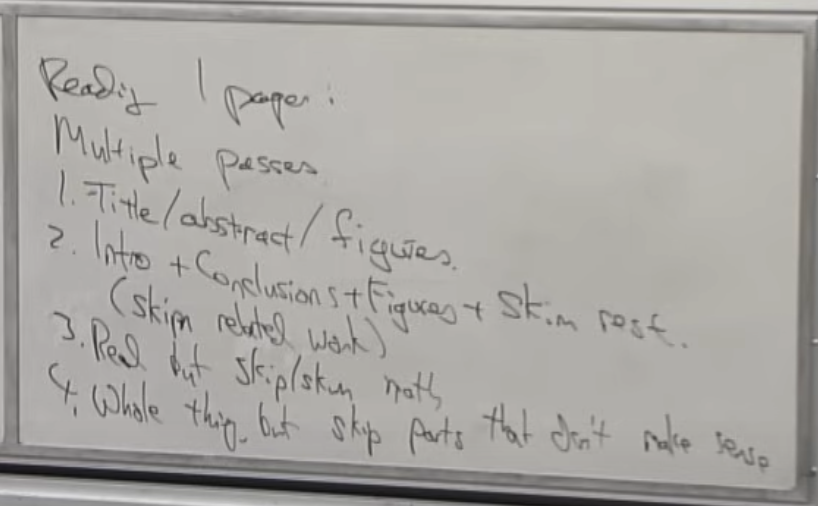
- Read only the title, abstract, and figures
- Read the introduction, conclusions, and figures more carefully, and skim the rest
- Read everything (but skip the math)
- Read everything (but skip parts that aren't meaningful)
Pass 1
First, read the title and abstract to get a general understanding of the paper's content.
Especially in the deep learning field, important information like model architectures is often presented in figures, so review those as well.
This first pass gives you a broad overview.
Pass 2
Next, read the introduction, conclusions, and all the figures carefully.
In scientific papers, the authors' main arguments are concentrated in the abstract, introduction, and conclusion.
From the paper writer's perspective, these are the sections they invest the most effort in, as they need to convince reviewers during the peer review process.
By the way, you can skim or even skip the Related Work section. This section is sometimes written with the ulterior motive of citing papers by potential reviewers to increase the chances of acceptance.
Passes 3-4
After that, read everything except the math once through, then read everything again, skipping "non-meaningful parts."
"Non-meaningful parts" are often found in older papers—sections that aren't considered very important anymore. For example, even in historically important papers, the authors themselves might not have known which parts would prove most significant at the time of writing. A lot of space may be devoted to content that turns out to be less important in hindsight. If those sections don't align with what you want to learn, it's fine to deprioritize them.
Checking Your Understanding
After reading a paper, you should check your understanding using these questions:
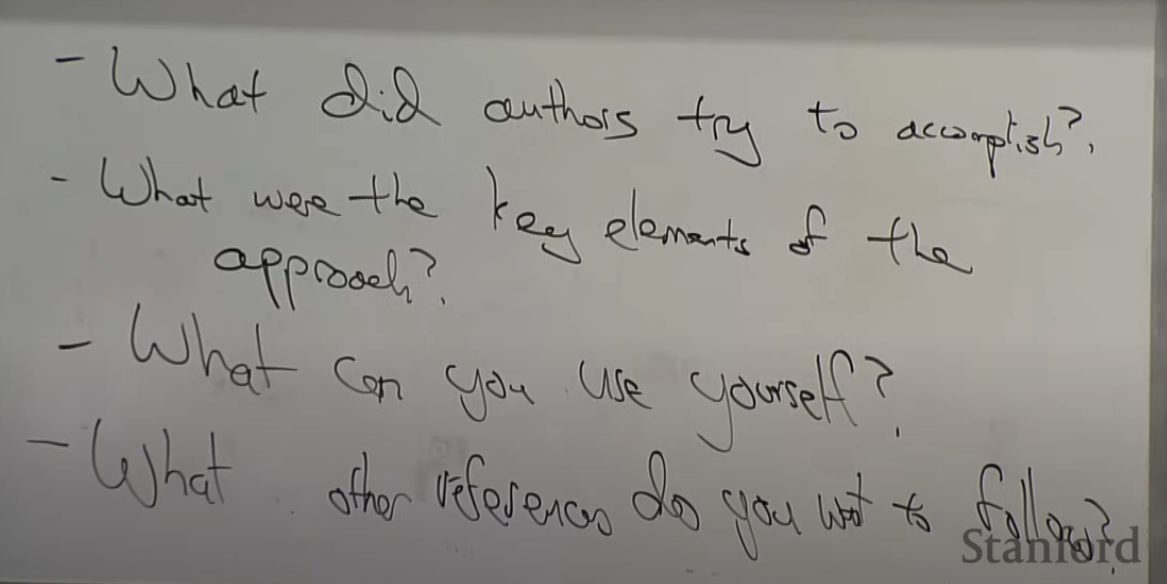
- What did authors try to accomplish?
- What were the key elements of the approach?
- What can you use yourself?
- What other references do you want to follow?
When discussing papers with others, it's also helpful to keep these perspectives in mind.
Conclusion
I've summarized Andrew Ng's tips for reading research papers.
Back in my university days when I was doing research, I used to read papers somewhat mindlessly and in large quantities. Going forward, I'd like to incorporate these techniques into my reading practice.
I hope this is helpful to someone out there.
[Related Articles]
