This is a summary of the review paper "Organoid intelligence (OI): the new frontier in biocomputing and intelligence-in-a-dish," which covers developments in Organoid Intelligence (OI).
- Introduction
- Organoid intelligence (OI): the new frontier in biocomputing and intelligence-in-a-dish
- Conclusion/Thoughts
- References
Introduction
The more I learn about how AI works, the more I realize how inefficient it is compared to biological neural systems—it really feels like we're still in the early stages of development.
That's when I discovered there's actually a field that uses neural cells themselves as computing elements.
Today, I'll be reading through this review paper that summarizes the current state of Organoid Intelligence (OI).
- Published: February 28, 2023
- Review paper
Since this is a review paper with extensive content, I'll highlight the parts that particularly stood out to me. If you're interested, I highly recommend checking out the original paper.
All figures included in this article are cited from the paper mentioned above.
Note: This article was translated from my original post.
Organoid intelligence (OI): the new frontier in biocomputing and intelligence-in-a-dish
Overview
- Background
- The brain is more energy-efficient than computers (in silico) for complex tasks
- Brain learning requires less data (compared to current AI)
- Proposal of OI: Organoid Intelligence
- Intelligence-in-a-dish
- A comprehensive concept within biocomputing that specifically uses brain neural cells for computing
- Key Features
- 3D culture of brain neural cells
- Diverse cell type composition including myelination and glial cells
- Microfluidic perfusion systems for controlling nutrients and chemical signals
- High-precision neural activity recording
- Electrical/chemical stimulus input
- Learning through stimulation (input) and activity recording (output)
- Open-loop / Closed-loop
Background
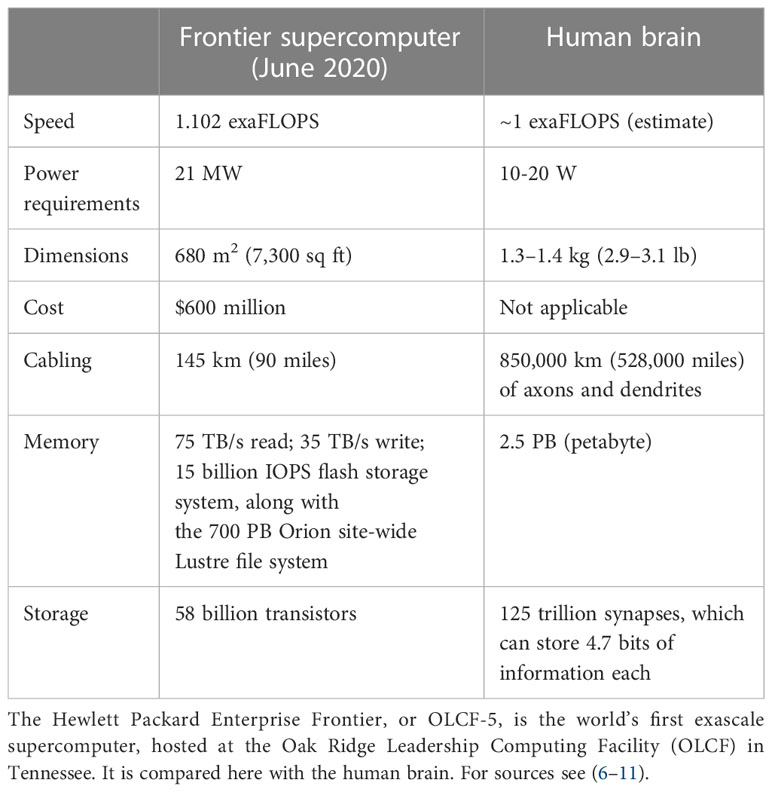
- The human brain is more energy-efficient than modern computers
- While computers excel at simple tasks (basic calculations), the brain is faster at complex tasks or those with insufficient information (e.g., decision-making for complex problems)
- Modern AI learning requires massive amounts of data, whereas the brain needs far less
OI: Organoid Intelligence
OI Architecture
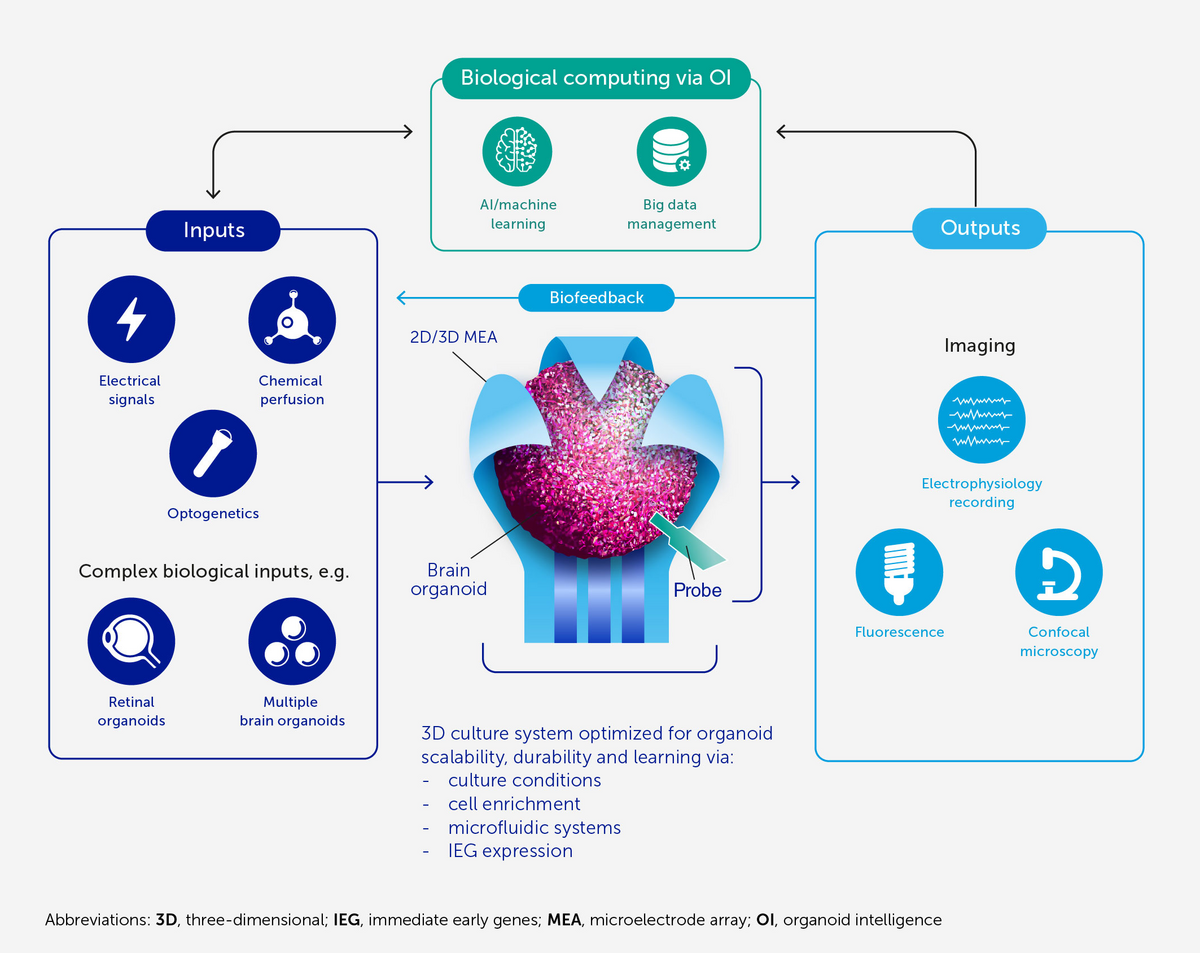
- Organoid Culture
- High cell density through 3D culture
- Enclosed in a shell equipped with microelectrodes to interface with the organoid
- Input to Organoid
- Electrical stimulation from microelectrodes
- Chemical signals from microfluidic perfusion systems
- Optogenetics
- Neural activity input from retinal organoids
- Output Detection
- Electrical signal detection via microelectrodes
- Fluorescence observation
- Confocal microscopy
- Analysis
- AI/machine learning algorithms to analyze OI responses (input/output)
- Big data infrastructure to store OI data in analyzable formats
3D Culture of Neural Cells
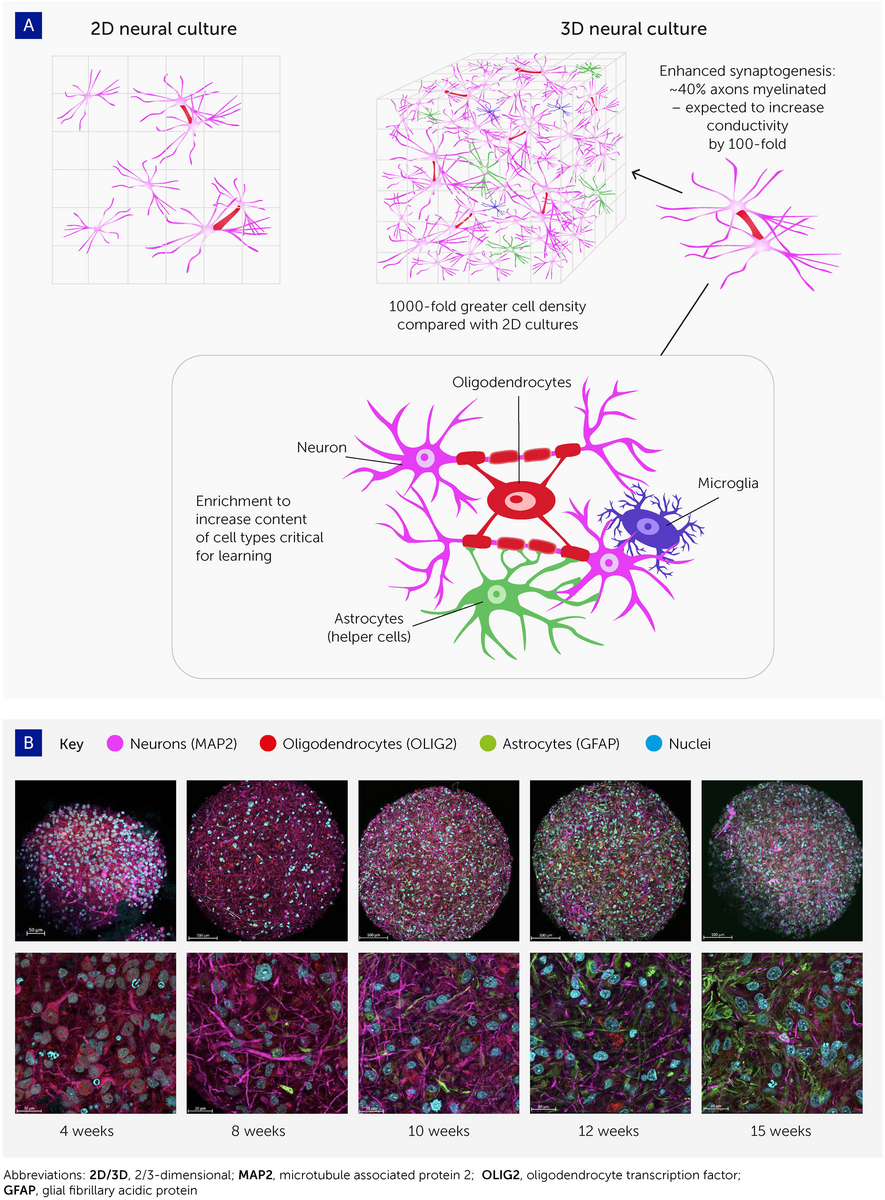
- Benefits of 3D culture compared to 2D culture
- Cell density
- Cell differentiation: enables differentiation into diverse cell types necessary for brain neural activity/learning
- Myelination
- Microglia
- Astrocytes
- (B) Organoid increasing cellular diversity as it grows
However, 3D culture of neural cells faces challenges:
- The center portion where nutrients cannot reach undergoes cell death
Microfluidic Perfusion System
- The center of organoids cannot receive nutrients and dies through necrosis
- Nutrients can only reach approximately 300μm deep
- In actual brains, blood vessels supply nutrients and remove waste
- Organoids need this function too
This is where microfluidic perfusion systems come in
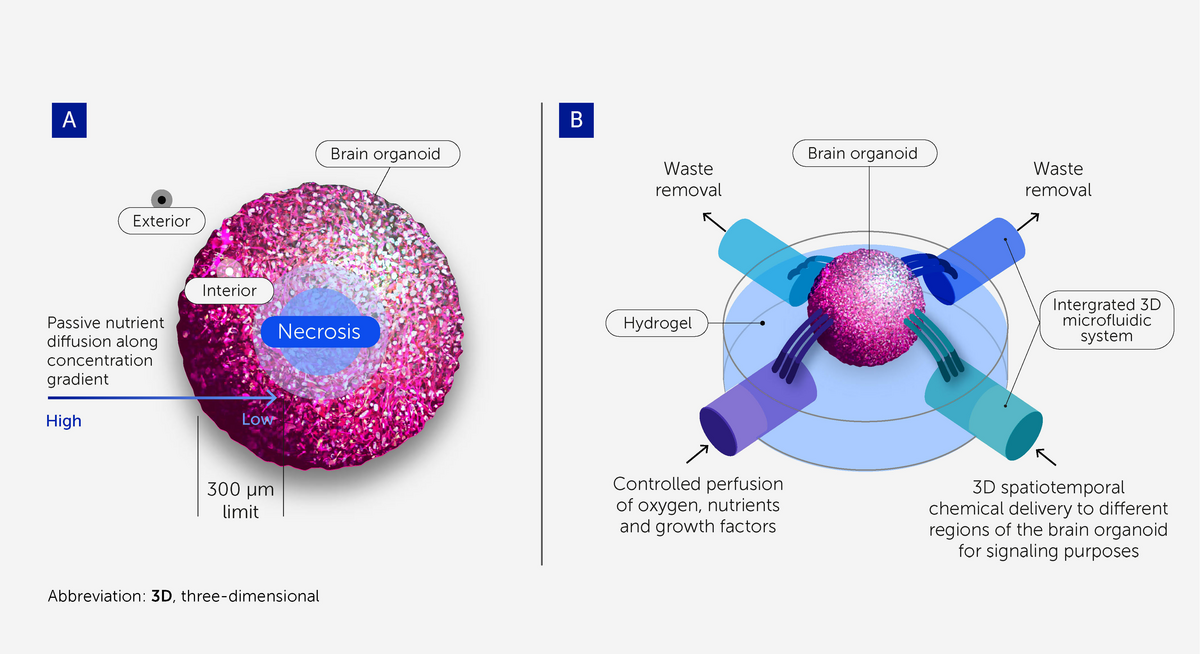
- Supplies essential elements for neural cells
- Oxygen
- Nutrients
- Growth factors
- This system can also be used to control chemical signals
Recording Neural Activity
How do we record neural activity in 3D organoids?
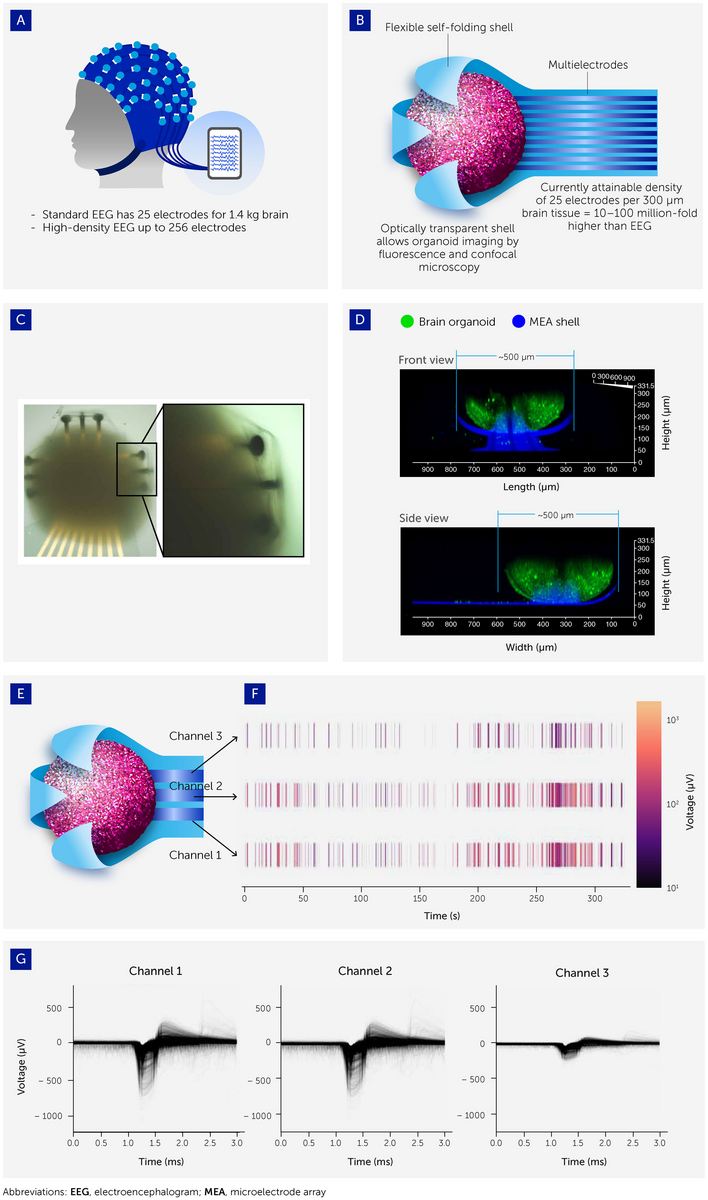
- Cover the organoid with a soft, self-folding "shell" equipped with microelectrodes
- Inspired by measurement devices for the human brain
- E-G: Organoid showing spontaneous electrical activity
- Spontaneous electrical activity indicates the presence of active synapses
What other approaches exist for recording organoid neural activity?
- Implantable electrodes
- The "shell" method mentioned earlier is non-invasive; implantable electrodes are invasive
- Invasive methods require balancing tissue damage
- Currently in the exploratory stage for appropriate probes
- Optical observation
- While unlikely to be the ultimate organoid recording method, it's useful for observing behavior
- Adjusting recording points
- We cannot record and analyze all neural activity
- Can we identify and observe a small number of critical information points?
Analyzing Neural Activity
How do we analyze and interpret the acquired neural activity?
- Algorithms are needed for analyzing organoid outputs and learning
- Statistical/machine learning algorithms to quantify functional changes in organoids
- Algorithms to quantify architectural changes in organoids
- Multivariate causal models of organoid changes and outputs to enable learning
- Big data infrastructure
- The volume of recorded data will be enormous, requiring data infrastructure to store and analyze it
- Standard data structures for neural activity are also needed
- Mechanisms to make this data open
- Multimodal data
- Reference datasets for the community
Considerations for Learning
Things to consider when training OI
- Organoid Interaction
- Open-loop and Closed-loop
- Open-loop: provide input and record responses
- Closed-loop: use neural activity resulting from input as feedback
- Utilizing biochemical perspectives
- Leveraging genes that are activated during learning
- Key elements for synaptic plasticity and memory formation
- Immediate early genes (IEGs)
- Neurotransmitter receptors
- Leveraging genes that are activated during learning
Future Outlook
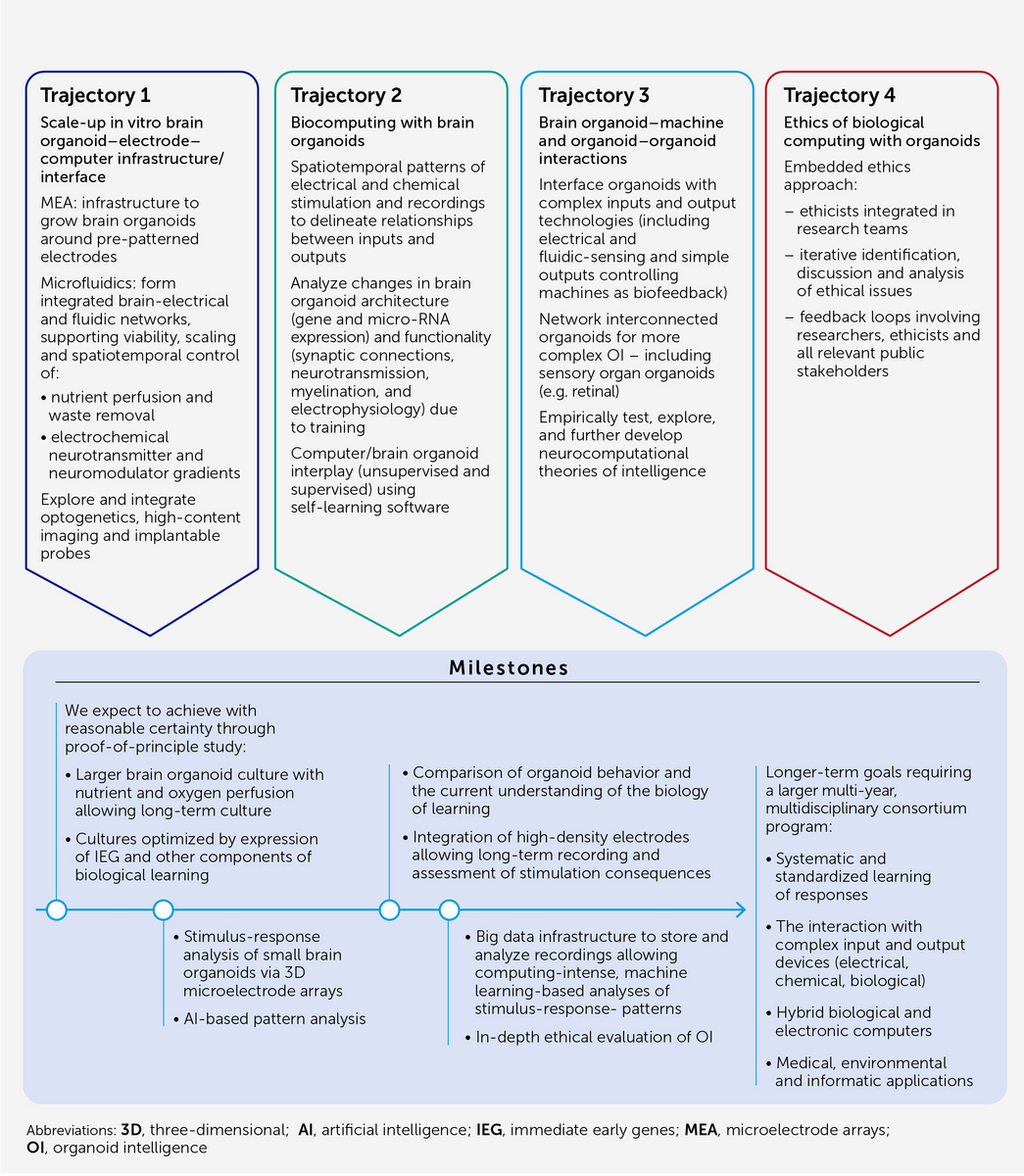
- Scaling up organoid systems
- Realizing computing with organoids
- Achieving more advanced organoid interfaces
- Resolving ethical issues
Conclusion/Thoughts
That concludes my summary notes on the paper "Organoid intelligence (OI): the new frontier in biocomputing and intelligence-in-a-dish."
Below are my personal notes:
- What cited papers should I read next?
- In vitro neurons learn and exhibit sentience when embodied in a simulated game-world https://www.cell.com/neuron/fulltext/S0896-6273(22)00806-6
- The concepts of ‘sameness’ and ‘difference’ in an insect | Nature
- Other thoughts
- Overall, I got the sense that this is clearly a field that's just getting started and needs foundational research to develop further. That said, research like the paper mentioned above (In vitro neurons learn...) has already demonstrated a certain level of learning capability. If a killer application emerges, the field might develop rapidly. However, unlike in silico AI, the need for specialized equipment makes it challenging for interested individuals to experiment casually. I wonder if there's an accessible way to try something simple. I'm also curious about how far companies like Cortical Labs have progressed.
[Related Articles]
